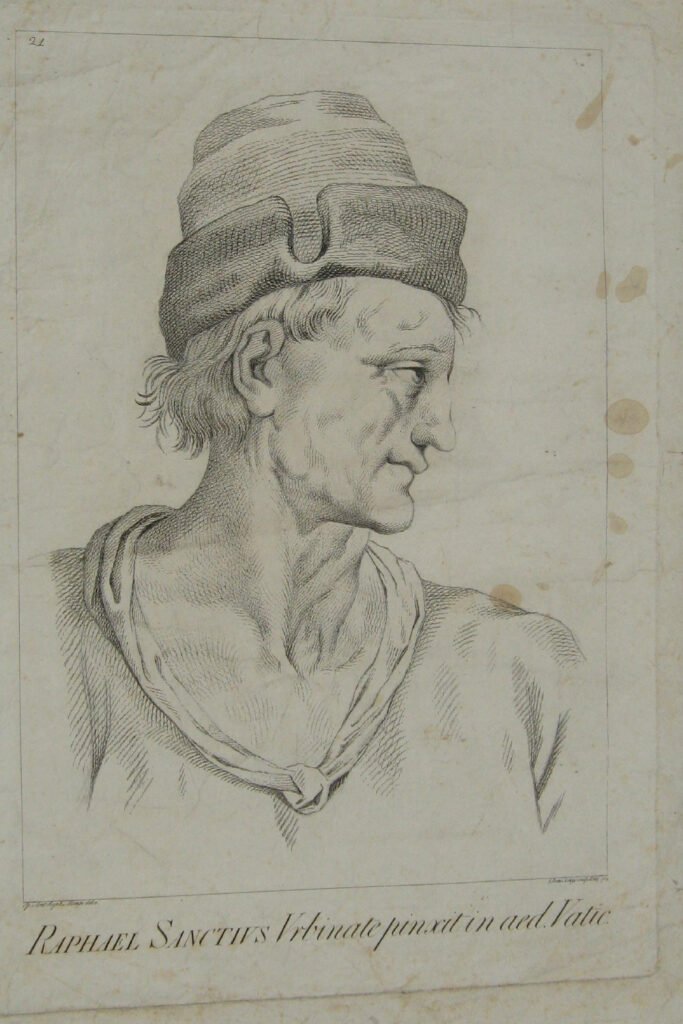
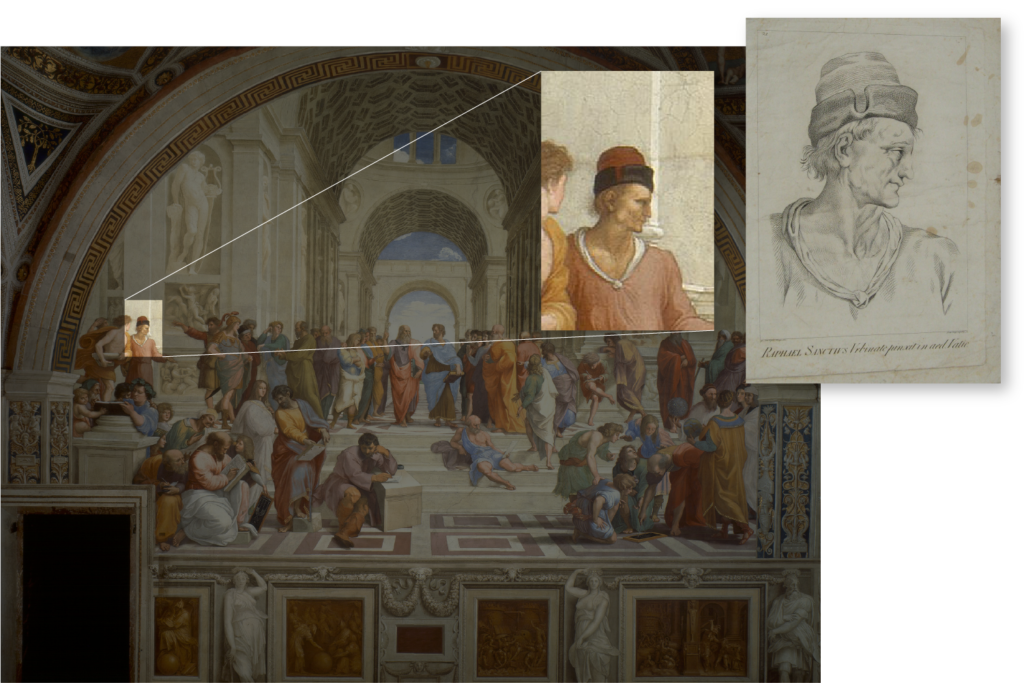
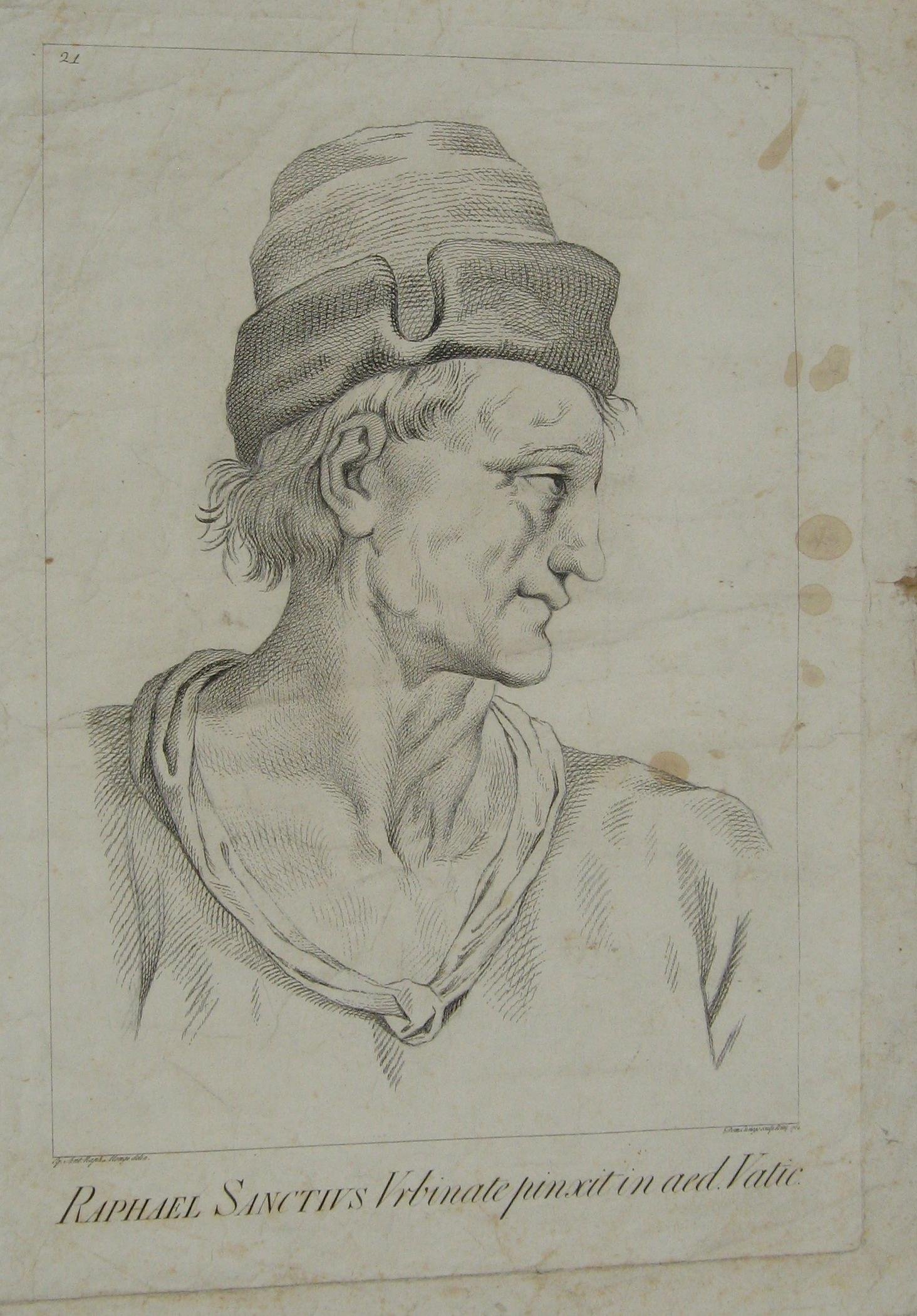
A masterfully executed 18th-century copper engraving by Domenico Cunego, depicting a philosopher from the Pythagorean group. This piece is part of a celebrated series based on Raphael’s fresco “The School of Athens” in the Apostolic Palace, Vatican City.
Visual Details
Description
This striking portrait showcases Cunego’s technical prowess in line engraving, specifically in the rendering of varied textures. The work captures a mature philosopher in a three-quarter view, distinguished by a prominent aquiline nose and a unique tall fabric cap with a V-shaped fold. The meticulous cross-hatching on the headwear and the rugged details of the neck create a remarkable sense of three-dimensionality and character realism.
The Subject
Traditionally identified as a member of the Pythagorean or Ionian school (possibly Anaximander), this figure is located on the far left of Raphael’s fresco. His presence in this series symbolizes the transmission of early Greek scientific and mathematical thought. The less idealized, more “artisan-like” clothing suggests a philosopher dedicated to practical observation and the recording of knowledge.
Technical Specifications
Artist
Domenico Cunego (Italian, 1726–1803)
Original Painter
Raphael (Raffaello Sanzio da Urbino, 1483–1520)
Medium
Copper Engraving / Etching
Date of Publication
Circa 1785
Series Title
Scuola d’Atene (The School of Athens)
Plate Number
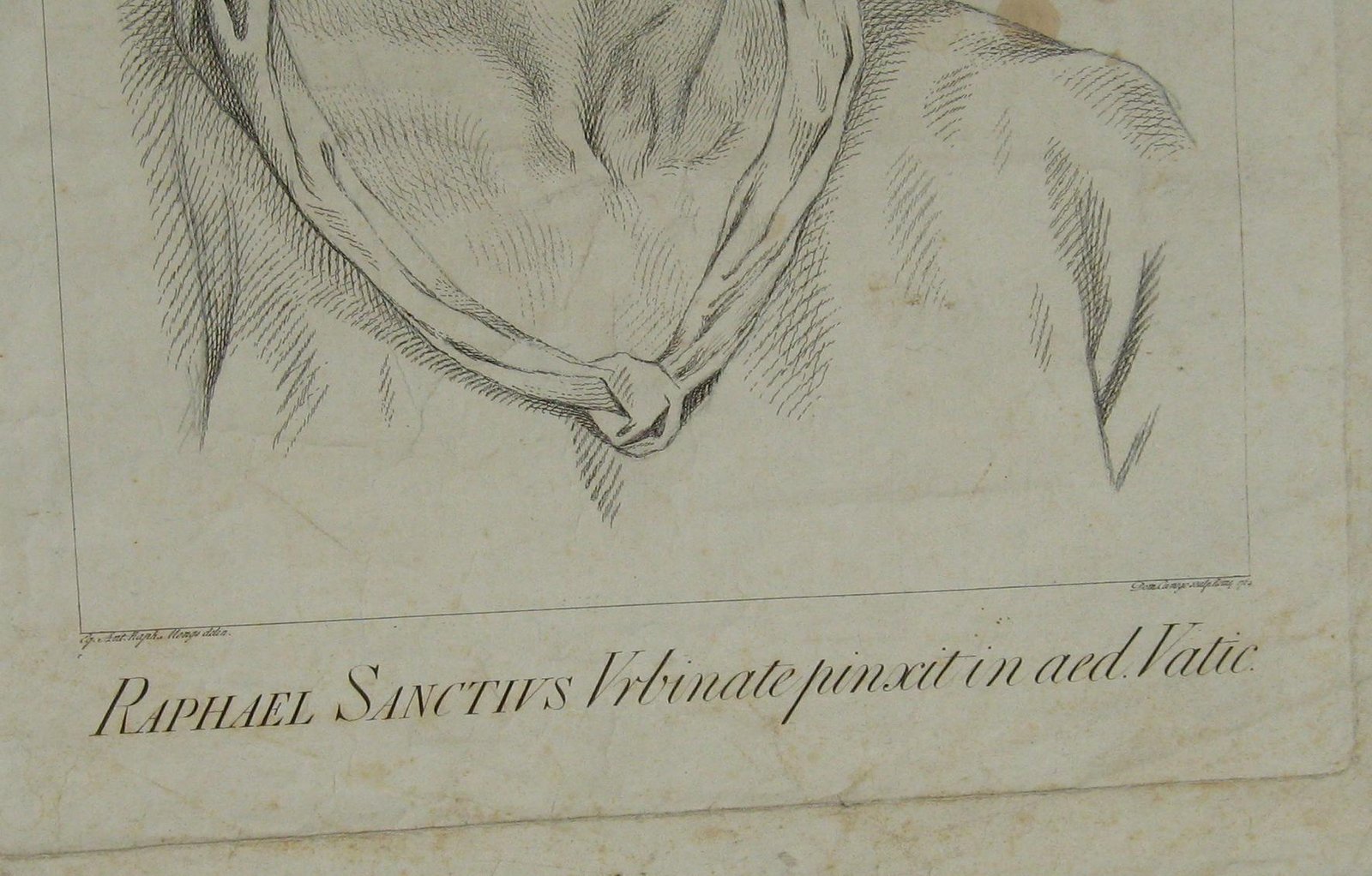
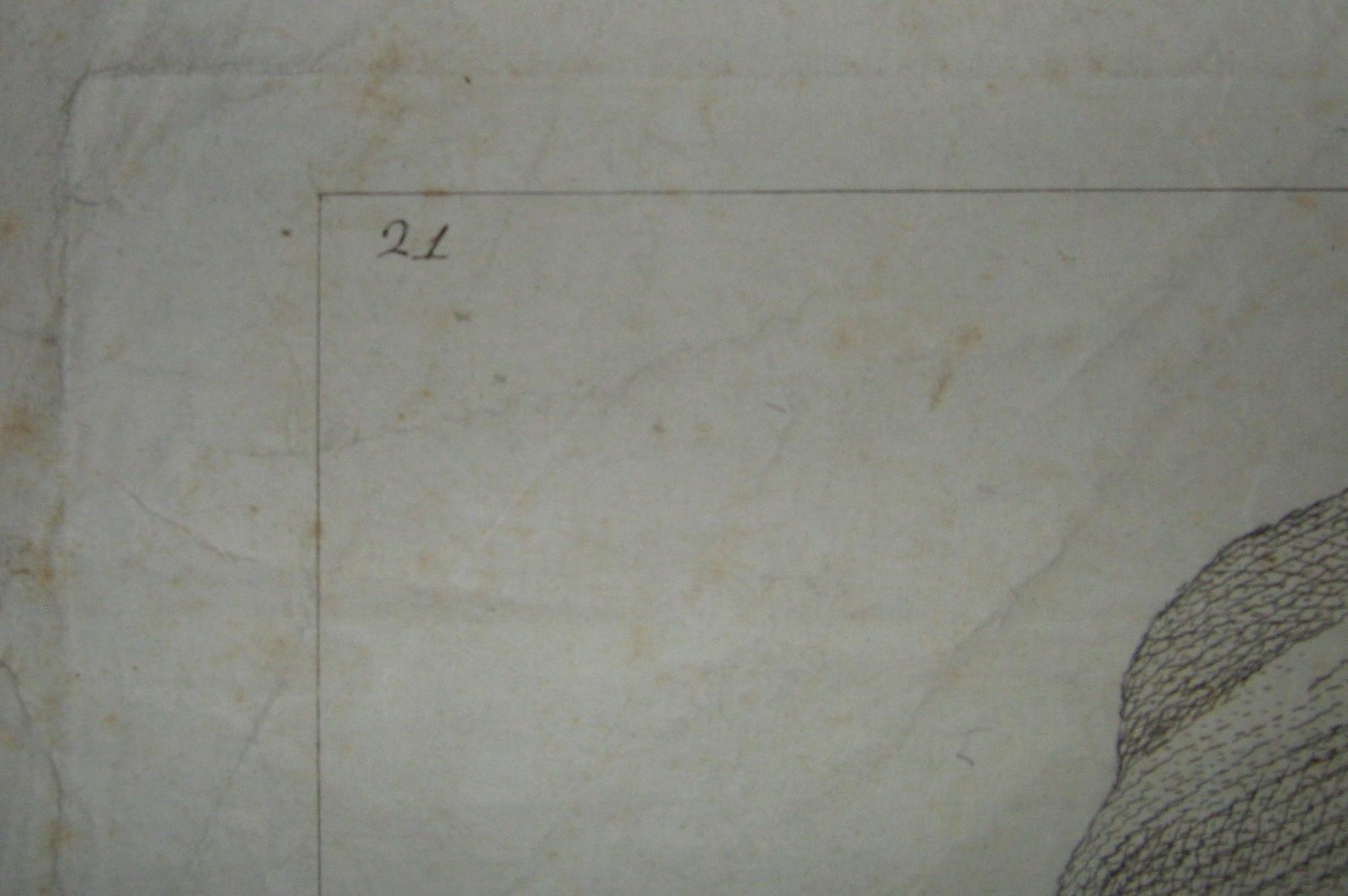
No. 21 (as indicated in the upper left corner)
Inscriptions
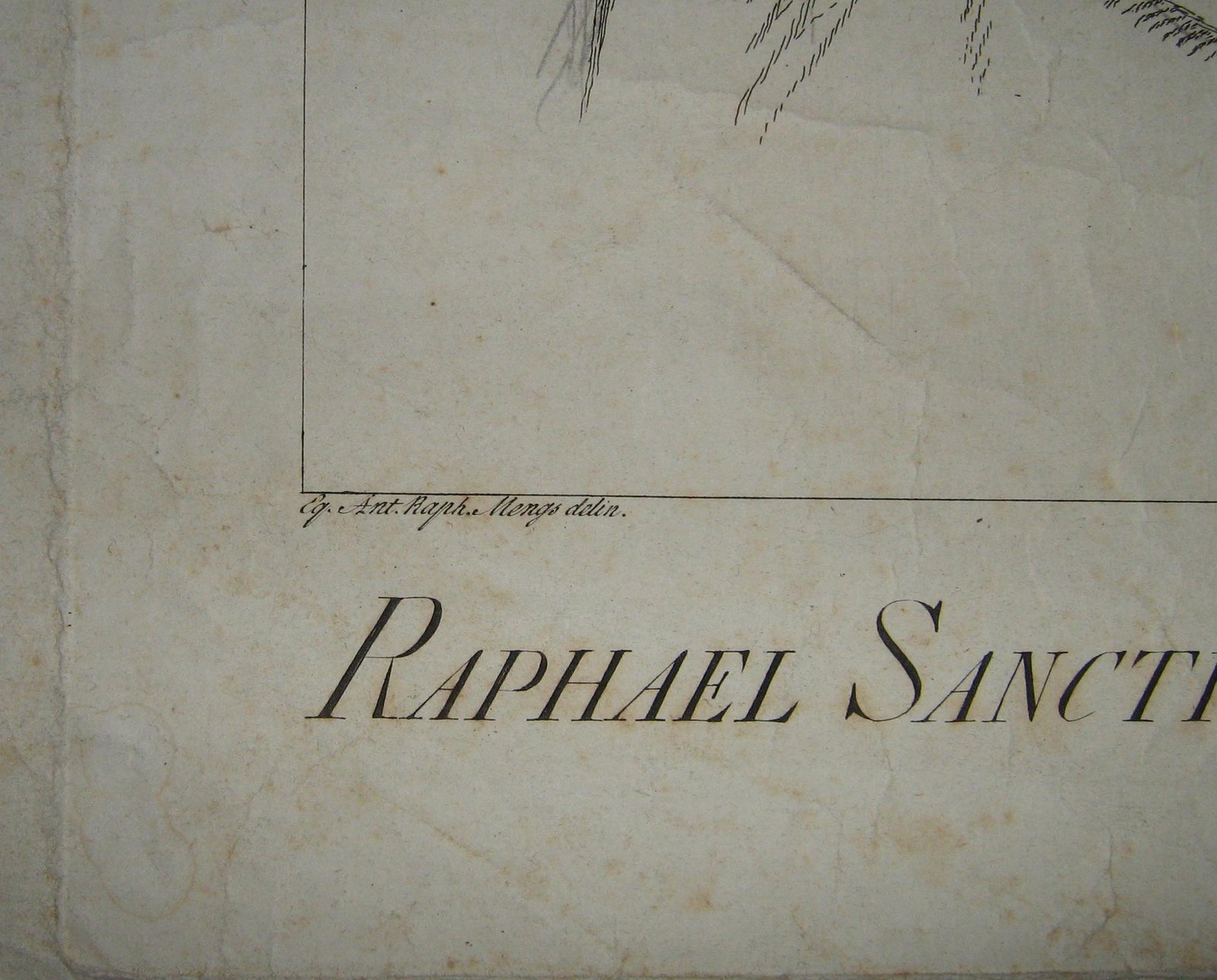
“RAPHAEL SANCTIUS Urbinate pinxit in aed. Vatic.” (Lower margin)
Paper Type
Laid paper (typical of late 18th-century European prints)
Dimensions (Approx)
Plate mark: 440 x 320 mm
Origin
Rome, Italy
Historical Significance
Domenico Cunego was a prominent Italian engraver of the 18th century, renowned for his ability to translate the grandeur of Renaissance frescoes into the delicate medium of copperplate. This series, published in Rome during the 1780s, served a vital role in disseminating the imagery of Raphael’s “Stanze” to a wider European audience of scholars and collectors. The plate number 21 signifies its place in this extensive pedagogical and artistic project, highlighting Raphael’s mastery in individualizing even secondary figures.
Explore the School of Athens Series
Inquiry & Acquisition
Condition Reports.
Detailed descriptions of paper quality, margins, and preservation state.
Provenance.
Direct history of the collection’s origin.
Secure Global Shipping.
Expertly packed and insured delivery to international collectors and institutions.